The Crawler
Many of my projects, and thus time spent, is very abstract. From conception, system architecture, problem solving and design to coding, there is a lot of conceptual moving parts that oftentimes are difficult to mesh together. When a project goes poorly, these conceptual ideas begin to meld, clash, and generally make thinking about things quite difficult. This is exacerbated when one has multiple projects, all very abstract, all perhaps hitting roadblocks and, generally, making thinking seem less appealing and making much more.
I certainly was in this headspace when I began this project. Multiple projects floating around at once had failed to solidify, and a feeling that I was stuck always coding had saturated my mindset. What I needed was a nice, simple project that involving little planning and conceptualization, little problem-solving, and little thinking. A project that would shake things up for me. Unfortunately, this project ended up involving all of those things.
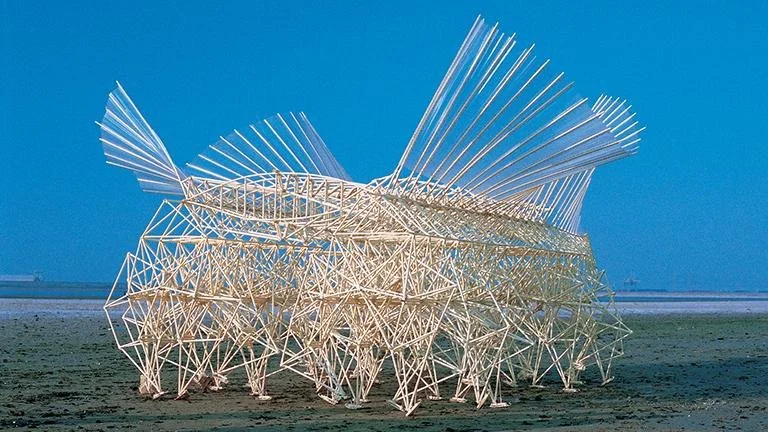
Long ago, years before this project materialized as an idea, I came across the Strandbeests. Magnificent mechanical contraptions, driven by the wind they seemed almost alive to my eyes, beautiful in their complexity. Created by Dutch artist Theo Jansen, they are massive walking mechanical “beasts“ that wander the beaches, autonomous and indifferent to the world, graceful and truly animal-like.
Their intricacy in mechanism and the overall effect they have while walking is mesmerizing. While pondering mechanical projects to pursue, these immediately came to mind, and I decided to create a miniature, toy version of these beautiful creations.
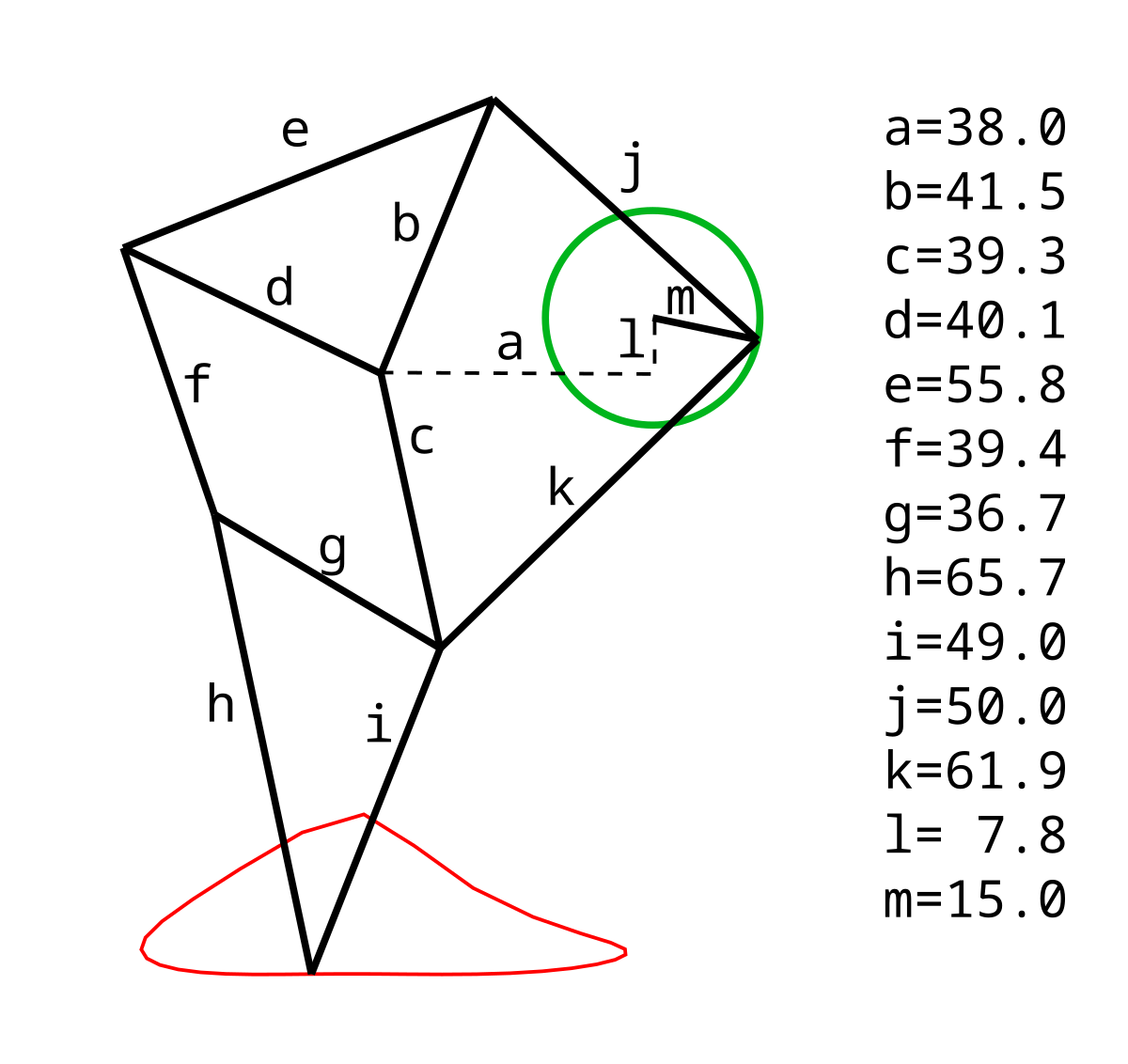
The primary components of these assemblies are the legs, based on Jansen’s mechanism. Theo Jansen refined this system through extensive computational optimization to produce a precise walking motion. His process identified a linkage that maintains a smooth, nearly flat trajectory during ground contact. This optimized configuration, known as Jansen’s linkage, is the design used in my walker.
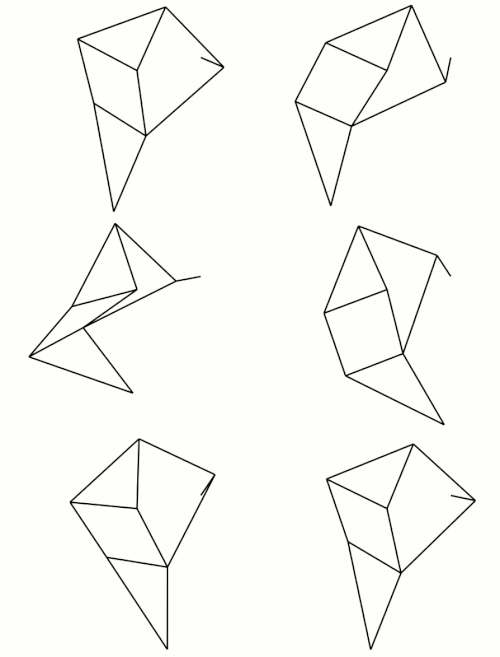
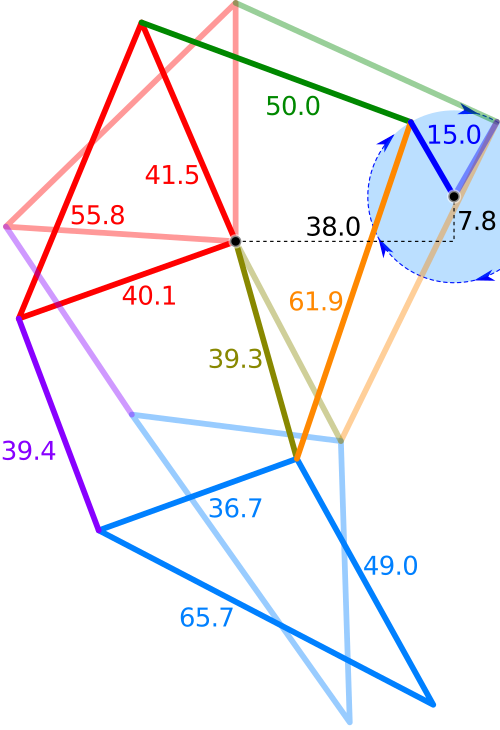
One can drive two legs at once with the same crankshaft. This reduces complexity when driving legs on the front and the back of the crawler. It also produces a complementary pair, with each leg offset 180° out of phase to each-other, allowing one leg to be in contact with the floor while another is lifting up. It does have the side effect of putting the front set of legs closer to the back set of legs, limiting stability. This does make it look cooler while decreasing drive complexity.
As all legs in a row pivot on the same main shaft, I designed those shafts as the main supporting frame of the crawler. This was great, as it provided a simple and compact frame for the crawler. It also features ribs connecting the two shafts, resulting in a solid frame, and allowing for a driving attachment.
As I wanted this to be an easy, fast project, I designed it to be fully 3d printed. This was easy and fast to assemble, and turned out quite well. I decided to gift it to my uncle for Christmas, so I added a quick last-minute geared drive to run the crankshaft. And it worked! Below is the only video I have remaining of it running.
Quite good! I was happy with this, as it satisfied what I wanted with the project, a fun little mechanism with little design complexity. It went to my uncle for Christmas, and the project was complete.
A few months later, the crawler was given back to me broken, as my uncle had dropped it. The resurfaced crawler now seemed to be begging for a significant upgrade. The ordered phases of the legs when running led to a wobbly motion, and it was prone to tipping over. In addition, the motor had been struggling to run the mechanism, and the legs with their low tolerances were very flimsy and felt very weak. Overall, I saw in the crawler all sorts of improvements, and in my mind I pictured a professional, polished crawler, complete with bearings and the sort. Perhaps I could even make it out of metal!
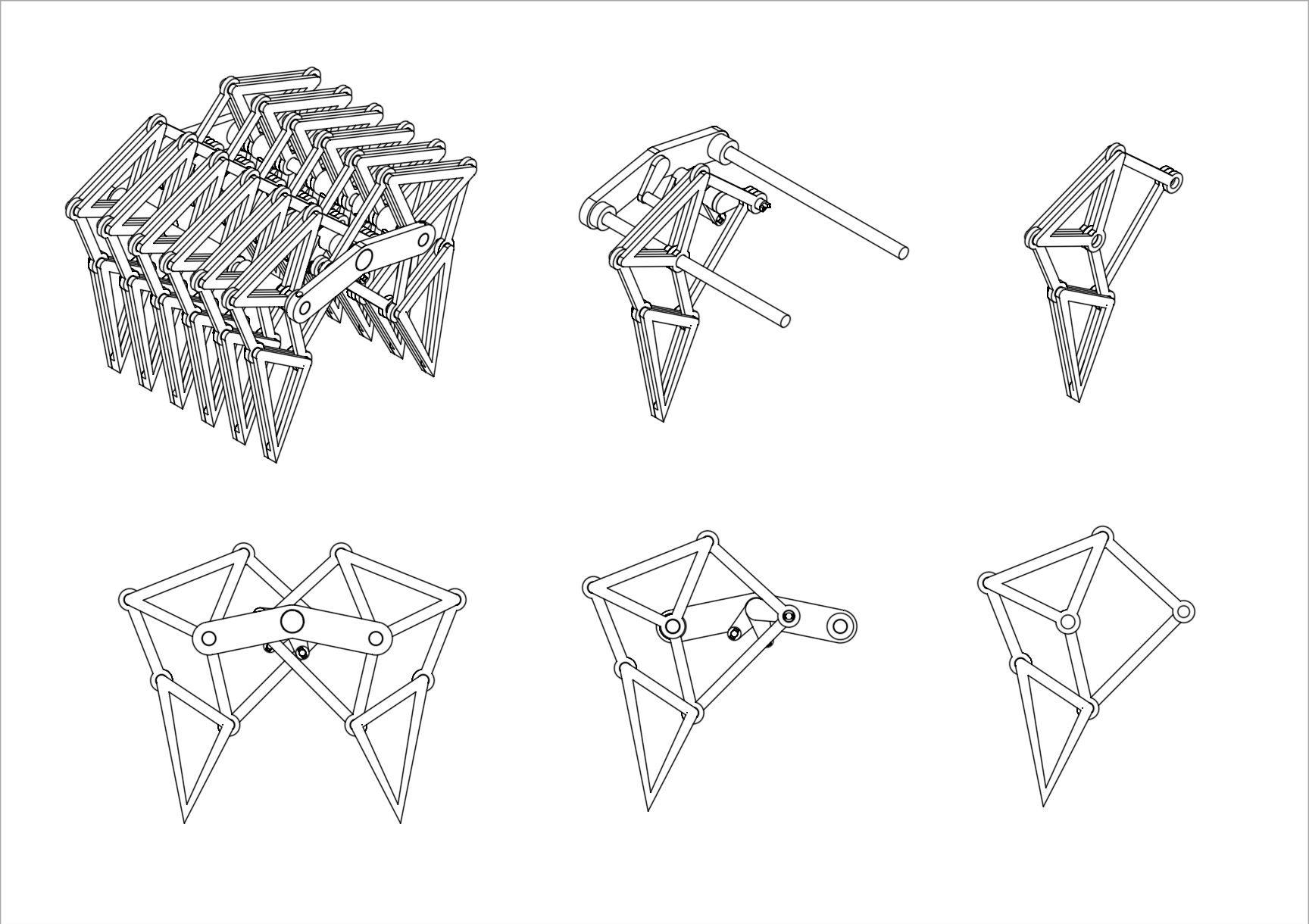
This was a big leap for me at the time, as I had no experience making and designing in metal with bearings and press-fits and daunting things such as those. Nonetheless, I designed a prototype design for the crawler, with carefully selected bearings and dowels. Below is a dissasembly of the design.
When switching to metal, the assembly process becomes significantly more arduous. Much more care needs to be put into the thought behind how and in what order the press-fits will be preformed, and in general how everything will all come together. Remember, this all still has to be quite small!
First, I divided the mechanism into two assemblies that would be bolted together. This would make managing the whole thing much easier. It also provided a space for motors to go, and if each triplet of leg-pairs were driven seperately, it could turn via an analogue of tank steering.
Though only a prototype, you can see the sheer complexity and number of parts present in the whole assembly. Each bearing would need to be press-fit once into their corresponding parts, and then again onto the shafts and dowels they ride along, all done on the
The main problem with this design, and in the design of this metal crawler in general, was how I would press-fit the bearings along the length of the main supporting shafts. Even with only 3 legs on a shaft, thats 9 bearings that need to be repeatedly pressfit along the length of the shaft. This would be very bad for the health of the shaft and the bearings, along with just being very difficult in general. How would i press-fit the top legs with the 2 leg-pairs below? This problem would prohibit me from progressing If I couldn’t figure a solution out.
It would be ideal if I could make each leg-pair individually, with the freedom to manipulate each as I needed while assembling, then attach onto the body of the assembly. This modularity would help significantly, but this new design seemed incompatible with a single, main supporting shaft, which was necessary for keeping all the legs together, and the whole mechanism in one piece. At the time, with the complexity of the rest of the assembly with its 300-something bits weighing on my mind, in addition to the unresolved supporting shaft issue, resulted in the Metal Crawler taking on a daunting and unmanageable form in my mind. I also needed to figure out the sourcing of all these precision parts and bearings, and for cheap due to the quantity required. All without a concrete form, it morphed back into an unmanageable series of abstract and complex type of problems, the same type I was trying to get away from when starting this project.
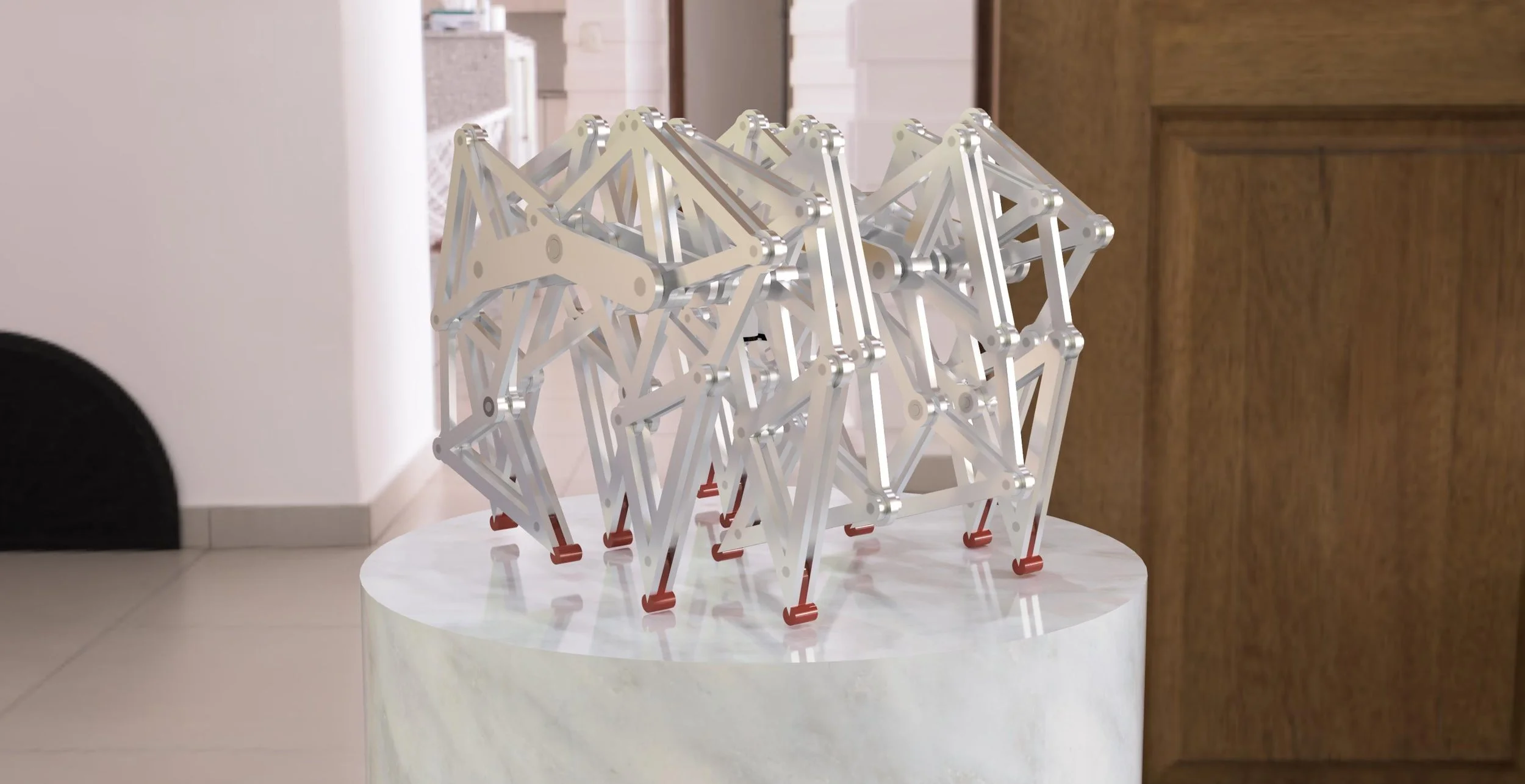
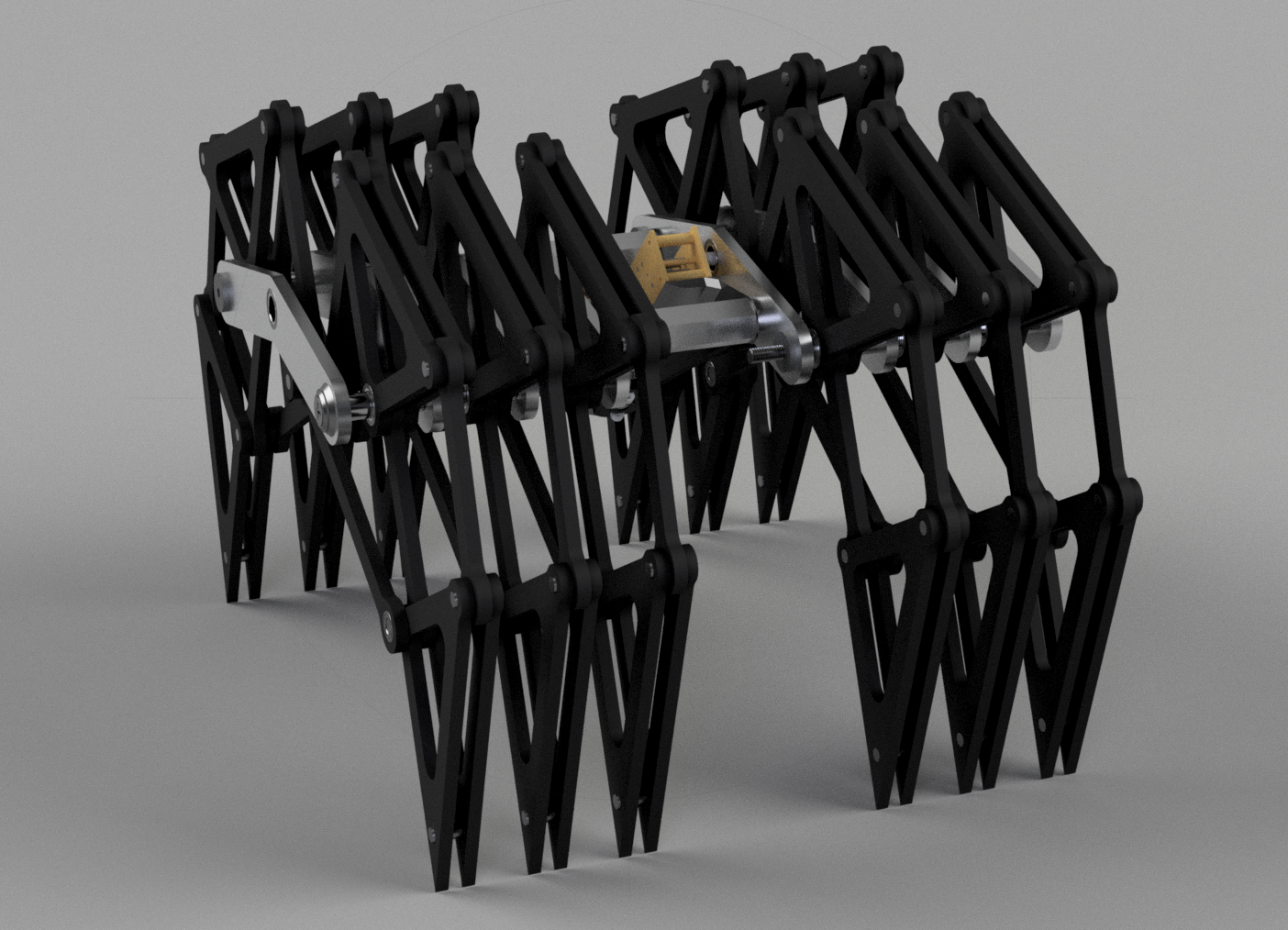
crawler render
After some time of deliberation, I came to a solution to unifying the modularity of assembly with the main shafts. If I could split the shaft up into pieces, and then join those together. The piece would look something like this.
